
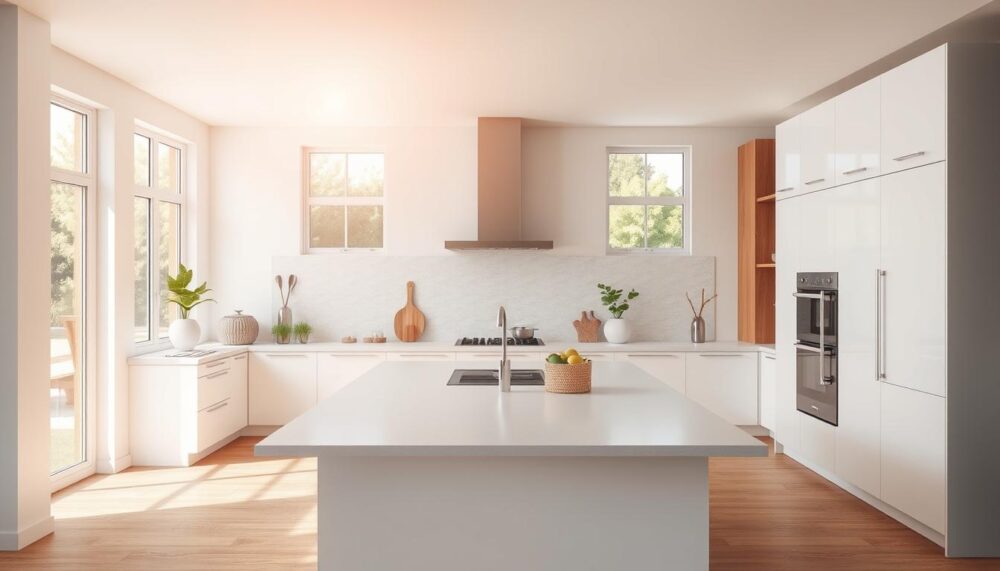
Creating your dream cooking space involves more than just choosing pretty colours. It requires careful planning and consideration of how you use the room every day. A successful kitchen combines aesthetics with practical functionality.
This comprehensive guide walks you through the entire process from initial concepts to final execution. We cover essential elements including layout options, colour schemes, and clever storage solutions. You’ll learn to create a beautiful space that works perfectly for your lifestyle.
Proper planning ensures your new kitchen will serve you well for years. Understanding workflow patterns and storage needs makes daily cooking more enjoyable. The right choices in materials and appliances create a harmonious and efficient environment.
Key Takeaways
- Assess your current space and identify specific needs before starting
- Establish a realistic budget that accounts for all renovation aspects
- Understand the kitchen work triangle for optimal workflow
- Select cabinets and worktops that balance aesthetics with durability
- Incorporate smart storage solutions to maximise organisation
- Choose a cohesive style that reflects your personal taste
- Consider both functionality and visual appeal in all decisions
Getting Started: Understanding Your Space and Needs
Before selecting colours or cabinets, a successful renovation begins with understanding your existing environment. This crucial first step ensures your new layout will function perfectly for years to come.
Taking Precise Measurements
Professional designers emphasise the importance of accurate dimensions. Measure wall-to-wall, floor-to-ceiling, and between fixed features.
Record these measurements in a table for easy reference. Include distances to windows, doors, and existing utilities. This data forms the foundation of your entire project.
You Might Also Like:



| Measurement Type | What to Record | Why It Matters |
|---|---|---|
| Wall lengths | Full dimensions in metres | Determines cabinet arrangements |
| Ceiling height | Floor to ceiling measurement | Affects storage solutions and lighting |
| Window positions | Height, width and placement | Influences natural light and layout |
| Door swings | Clearance areas needed | Prevents traffic flow issues |
Assessing Existing Plumbing and Electrical Points
Current utility locations significantly impact your options. Plumbing and electrical points often dictate where major appliances must go.
Moving these utilities requires major work and increases costs. Document their positions carefully before planning your new arrangement.
Defining How You Use Your Kitchen
Consider your daily routines in this important room. Do you cook intensively, entertain guests, or help with homework here?
Identify current pain points and inefficiencies. Your new space should solve these issues while accommodating future needs.
Think about storage requirements for all your items. From everyday dishes to special occasion pieces, everything needs its place.
Establish clear priorities based on your actual lifestyle. Avoid following trends that don’t suit how you really use the space.
Establishing a Realistic Budget for Your Project
Financial planning forms the foundation of any successful home improvement. A clear budget keeps your renovation on track and prevents stressful overspending. It transforms your vision into achievable reality.
Industry experts suggest allocating 10-20% of your property’s value for this important room. This investment typically enhances both daily living and resale potential. Smart financial choices ensure quality results without unnecessary debt.
Key Cost Factors: Cabinetry, Appliances, and Worktops
Cabinetry often represents the largest expense, consuming 30-40% of your total budget. Custom units offer personalised solutions but cost more than standard options. Ready-to-assemble choices provide excellent value for money.
Appliances account for 15-20% of overall costs, with prices varying by brand and features. Energy-efficient models might cost more initially but save money long-term. Integrated versions blend seamlessly with your cabinetry for a streamlined look.
Worktop materials generally take 10-15% of your funds. Options range from practical laminate to luxurious natural stone. Consider durability, maintenance, and visual appeal when making your selection.
Planning for a Contingency Fund
Always include a 10-20% buffer for unexpected issues during your project. Hidden problems like wiring faults or structural concerns often emerge during renovations. This safety net prevents financial stress and project delays.
Professional installation costs vary depending on complexity and local labour rates. Obtain multiple quotes from different contractors to ensure fair pricing. Quality workmanship protects your investment and ensures longevity.
Prioritise spending based on what matters most to your household. You might prefer premium worktops over high-end appliances, or vice versa. These personal choices create a space that truly reflects your lifestyle.
Research materials and brands thoroughly before committing. Quality products might cost more initially but often prove cheaper over time. They require less maintenance and replacement, saving money in the long run.
Finding Inspiration and Defining Your Kitchen Style
Discovering your perfect aesthetic direction transforms ordinary spaces into personalised sanctuaries. This exciting phase allows you to express your unique personality through deliberate decorative choices.
Your selected look should harmonise with your home’s architecture and existing room schemes. Consider how different materials and finishes complement your overall lifestyle requirements.
Popular Styles: From Shaker and Modern to Country and Industrial
Contemporary spaces favour clean lines and minimalist aesthetics for a sleek appearance. This approach creates uncluttered environments with sophisticated visual appeal.
Traditional Shaker designs focus on quality craftsmanship and functional simplicity. Their timeless elegance ensures lasting beauty through changing trends.
Country schemes deliver warm, inviting atmospheres with comfortable, homey vibes. They often incorporate vintage elements and natural textures.
Industrial looks embrace raw, utilitarian aesthetics with exposed structural features. Rugged materials and metallic finishes define this urban-inspired style.
| Style | Key Characteristics | Maintenance Level |
|---|---|---|
| Scandinavian | Simplicity, functionality, muted tones | Low |
| Farmhouse | Comfortable, vintage elements, rustic charm | Medium |
| French | Elegance, soft colours, ornate details | High |
| American | Spacious layouts, large islands, abundant storage | Medium |
Creating a Mood Board
Develop physical or digital collages featuring inspiration images and material samples. Collect colour swatches and product photographs that reflect your desired aesthetic.
This visualisation technique helps clarify your preferences before committing to final choices. It reveals how different elements work together harmoniously.
Consider blending multiple design approaches for a truly unique, personalised look. Many successful spaces combine elements from different stylistic traditions.
Evaluate the long-term appeal of your selections, particularly regarding future property sales. Some styles maintain broader market appeal than others.
Choosing the Optimal Kitchen Layout
Finding the perfect arrangement for your cooking area makes all the difference between a frustrating space and a dream room. The right configuration transforms how you move, work, and socialise in this important hub of your home.
Your chosen plan must balance practical needs with your available square metres. It should create an efficient workflow while maximising every centimetre of storage potential.
Classic Layouts: Galley, L-Shape, U-Shape, and Island
Galley arrangements feature parallel runs of cabinets creating a central corridor. This clever solution works brilliantly in narrower rooms where space is limited.
L-Shape configurations utilise two adjoining walls at right angles. They offer excellent flexibility for medium to larger areas with good traffic flow around the perimeter.
U-Shape plans provide three walls of storage and work surfaces. These deliver maximum functionality for generous rooms where multiple cooks might work together.
Island layouts introduce a freestanding unit at the room’s centre. They create additional prep space and often become a natural gathering spot for family and guests.
Peninsula designs connect to existing cabinetry as a space-saving alternative. They offer similar benefits to islands without requiring as much floor area.
Evaluating Layouts for Your Space and Lifestyle
Consider your room’s specific dimensions and architectural features. The ideal arrangement must work with existing plumbing and electrical points to avoid costly alterations.
Think about how multiple people might use the space simultaneously. Some households need clear pathways between cooking zones, while others prioritise social interaction.
Evaluate how natural light moves through different configurations. Open-plan homes particularly benefit from layouts that maintain sightlines to adjoining living areas.
Anticipate future needs as your family grows or habits change. A flexible plan adapts beautifully to evolving requirements over many years.
As experts at Red House Custom Building note, “The work triangle creates an efficient path between the stove, sink, and refrigerator.” This fundamental principle ensures your kitchen functions smoothly for daily tasks.
Remember that storage solutions should complement your chosen configuration. Vertical stacking and clever cabinet designs maximise every available centimetre.
Your final decision should reflect both practical considerations and personal preferences. The perfect layout feels intuitive from the moment you begin using it daily.
Mastering the Work Triangle and Functional Zones
Efficient movement between key appliances transforms your cooking experience from chaotic to seamless. Smart spatial planning creates intuitive pathways that make meal preparation feel effortless.
These principles work beautifully whether you’re updating an existing space or planning from scratch. They ensure everything sits exactly where you need it most.
The Rules of the Kitchen Work Triangle
The classic work triangle connects your refrigerator, cooker, and sink. This time-tested concept optimises the relationship between these three crucial points.
Each leg should measure between 1.2 and 2.7 metres. The total perimeter should fall between 3.6 and 7.9 metres.
Keep pathways clear of major obstructions like islands or dining tables. Nothing should interrupt the natural flow between these essential stations.
As one expert notes,
“The triangle’s magic lies in its simplicity – it creates efficiency through thoughtful positioning.”
Creating Efficient Prep, Cooking, and Cleaning Zones
Modern approaches often build upon the triangle concept with dedicated zones. These specialised areas streamline specific tasks beautifully.
Your preparation zone needs ample counter space near the refrigerator. Include storage for small appliances and mixing bowls.
The cooking area centres around your stove and oven. Store pots, pans, and utensils within easy reach.
Position your cleaning zone around the sink and dishwasher. Keep waste and recycling bins nearby for quick cleanup.
Consider additional zones if your lifestyle demands them. Baking stations or coffee preparation areas add wonderful functionality.
Storage zones for dishes and cutlery complete the picture. Place frequently used items in the most accessible locations.
These zones should interact smoothly with clear transitions between them. The result is a space that feels both organised and inviting.
Remember that open-plan layouts might require adaptations. The core principles remain valuable guides for creating your perfect cooking environment.
A Guide to Cabinets and Intelligent Storage Solutions
Intelligent storage transforms chaotic cupboards into organised sanctuaries of efficiency. The right cabinetry combines visual appeal with practical functionality that makes daily cooking a pleasure rather than a chore.
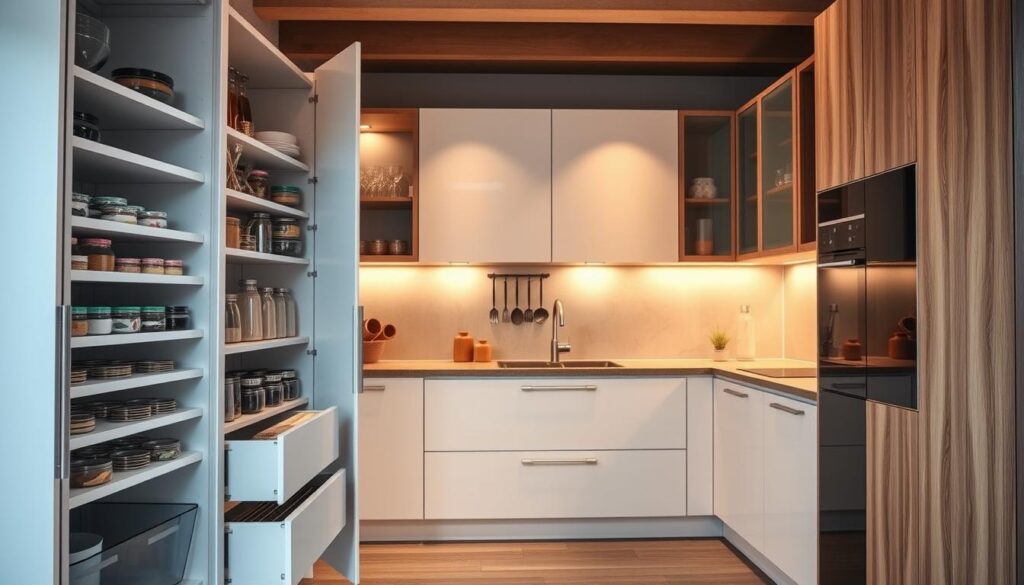
Selecting Cabinet Styles and Finishes
Contemporary units feature clean lines and minimalist hardware for a sleek appearance. Traditional styles showcase detailed door profiles and decorative elements that add character.
Your finish options include painted surfaces offering colour flexibility. Grained treatments highlight natural wood patterns beautifully. Glazed finishes create depth and visual interest.
Consider construction quality including door mechanisms and shelf adjustments. Durable materials ensure long-term performance despite daily use. Quality craftsmanship protects your investment for years.
Maximising Space with Pull-Out Racks and Larder Units
Pull-out racks make pots and pans easily accessible. Deep drawers accommodate baking sheets and large items perfectly. Specialised organisers keep cutlery and utensils neatly arranged.
Tall larder units with adjustable shelving maximise vertical space wonderfully. Integrated spice racks and pull-out pantry systems create organised food storage. These solutions eliminate cluttered countertops effectively.
Corner carousels transform awkward areas into functional spaces. Magic corner units ensure no centimetre goes unused. These clever options make every storage area fully accessible.
Appliance garages hide small gadgets behind beautiful doors. Workstation cabinets maintain clean surfaces while providing dedicated spaces. These ideas contribute to a streamlined appearance.
Glass-front units display attractive dishware elegantly. Open shelving offers easy access to frequently used items. Both approaches add personality while maintaining practicality.
Internal organisation systems include drawer dividers and custom inserts. Tray organisers and specialised fittings keep everything in its place. These details make daily routines smoother and more enjoyable.
Remember that quality cabinet construction represents a significant investment. Smart storage solutions dramatically improve your kitchen’s functionality and enjoyment for years to come.
Selecting Worktops and Splashbacks
Your work surfaces and wall protection elements create both practical and visual foundations for your cooking space. These essential components combine durability requirements with aesthetic considerations for a cohesive appearance.
Choosing the right materials ensures your surfaces withstand daily use while maintaining their beautiful appearance. The perfect selections reflect your personal style while meeting practical household needs.
Comparing Materials: Quartz, Granite, Laminate, and Marble
Quartz surfaces offer excellent durability with minimal maintenance requirements. These engineered materials provide numerous colour and pattern options for versatile styling choices.
Natural granite delivers a luxurious appearance with unique veining patterns. This premium material requires regular sealing to maintain its beauty and resist potential staining.
Laminate options present cost-effective solutions with extensive design possibilities. Modern versions beautifully mimic more expensive materials through advanced printing techniques.
Marble worktops offer classic elegance with distinctive natural veining. Their timeless aesthetic comes with careful maintenance requirements to prevent staining and etching.
Wood surfaces bring warm, natural appeal to your cooking area. These require regular oiling or sealing to protect against moisture damage and general wear.
Making Your Splashback a Design Feature
Transform your splashback from purely functional to a stunning focal point. Creative ideas turn this practical area into an expression of personal style.
Consider continuing your worktop material up the wall for seamless visual flow. This approach creates a continuous appearance that enhances spatial perception.
Explore tile options including classic ceramic or contemporary glass varieties. Stainless steel offers industrial looks with excellent durability and easy cleaning.
Full-height splashbacks behind cooking zones and sinks provide maximum protection. They create dramatic visual impact while serving practical purposes beautifully.
Don’t hesitate to inject personality through bold colours or interesting patterns. Custom designs reflect individual taste while complementing your overall look.
As experts at Avon Renovations note, “Quartz accounts for about 40% of new installations due to its durability and low maintenance requirements.” This popular choice combines practicality with aesthetic flexibility.
Your splashback presents an opportunity to experiment with different textures and finishes. Consider how light reflects off various materials throughout the day.
Balance visual appeal with practical cleaning considerations when making final choices. Some materials require more maintenance than others to keep their beautiful appearance.
Selecting Appliances, Sinks, and Taps
Your final choices for equipment and fixtures bring both practical performance and visual harmony to your cooking space. These elements work together daily, making thoughtful selection crucial for long-term satisfaction.
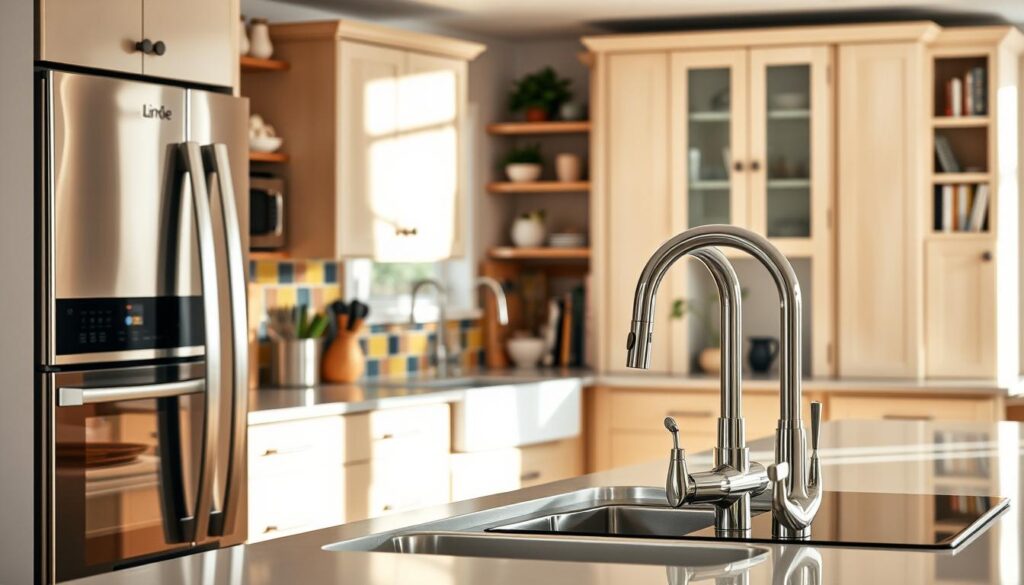
Choosing Integrated and Energy-Efficient Appliances
Modern appliances offer impressive energy savings without compromising performance. Look for models with high efficiency ratings to reduce your environmental impact and utility bills.
Integrated units blend seamlessly with cabinetry for a streamlined appearance. They maintain a cohesive look while providing full functionality. This approach works beautifully in contemporary schemes.
Consider proportions carefully when selecting your equipment. Oversized appliances can overwhelm smaller spaces, while undersized models may look lost in larger rooms. Balance scale with your available area.
Your dishwasher should accommodate typical load sizes while operating quietly. Modern models feature advanced cleaning technology and energy-saving modes. They integrate beautifully with cabinetry fronts.
Finding the Perfect Sink and Tap Combination
Sink materials range from durable stainless steel to elegant composite options. Each offers different maintenance requirements and visual characteristics. Consider how they complement your worktops.
Tap styles include practical pull-out models and sophisticated motion-activated solutions. As experts at Nordiska Kök note, “Faucets should complement the overall kitchen design and aesthetics, becoming a beautiful detail rather than detracting from the rest of the design.”
Installation methods affect both appearance and practicality. Under mount sinks create seamless transitions to work surfaces. Top mount versions offer easier installation with clean lines.
Consider sink depth and configuration based on your cooking habits. Deeper bowls accommodate large pots, while double configurations enable multitasking. Innovative features like integrated drainboards add functionality.
Coordinate finishes between your sink and tap for a cohesive appearance. Chrome and stainless steel offer durability and easy maintenance. Brass and copper provide distinctive character with unique patinas.
Your choices represent long-term investments in daily convenience and satisfaction. Quality equipment enhances both practical use and visual appeal for years to come.
Finishing Touches: Lighting, Colours, and Flooring
Your final decorative decisions transform a functional space into a truly personal environment. These elements work together to create atmosphere and define character throughout your cooking area.
Thoughtful selections ensure both visual harmony and practical comfort. They represent the last layer that completes your overall vision perfectly.
Designing a Layered Lighting Plan
A comprehensive lighting scheme combines different types for various purposes. Each layer serves specific functions while contributing to the overall ambiance.
Task lighting focuses on work surfaces where precision matters most. Under-cabinet fixtures illuminate countertops for safe food preparation.
Pendant lights over islands provide both illumination and style. They create focal points while ensuring good visibility for cooking tasks.
Ambient lighting offers general illumination throughout the entire room. Recessed ceiling fixtures or track systems create warm, welcoming atmospheres.
Accent lighting highlights special features and decorative elements. Interior cabinet lights showcase beautiful dishware and collectibles.
Shelving illumination adds depth and visual interest to open displays. These subtle touches contribute to the room’s overall character.
Dimmer switches allow adjustment of light levels throughout the day. They create flexibility for different activities and moods.
Choosing a Cohesive Colour Scheme
Your colour palette should harmonise with cabinets, worktops, and splashbacks. A coordinated approach creates visual flow and sophistication.
Lighter tones make compact spaces feel more open and airy. They reflect natural light beautifully throughout the day.
Darker hues add drama and depth to larger areas. They create intimate, sophisticated atmospheres with real character.
Consider how colours interact with natural and artificial lighting. Samples viewed at different times prevent disappointing surprises.
Your appliance finishes should complement the overall scheme. Stainless steel offers neutrality, while coloured models make bold statements.
Flooring materials should work with your selected palette. They provide the foundation that ties everything together seamlessly.
| Colour Scheme | Best For | Atmosphere Created |
|---|---|---|
| Monochromatic | Modern spaces | Calm and streamlined |
| Complementary | Traditional rooms | Dynamic and balanced |
| Analogous | Transitional schemes | Harmonious and soothing |
| Triadic | Bold statements | Energetic and vibrant |
Selecting Durable and Stylish Flooring
Flooring choices must withstand heavy foot traffic and occasional spills. Practical considerations ensure long-term satisfaction and performance.
Hardwood offers timeless appeal with natural warmth underfoot. It develops character over time while providing excellent durability.
Porcelain tile resists scratches, stains, and moisture effectively. Modern designs replicate natural materials with impressive realism.
Vinyl and linoleum provide comfortable, low-maintenance solutions. They offer excellent value with extensive design possibilities.
Consider slip resistance near sinks and cooking zones. Safety features prevent accidents while maintaining beautiful appearances.
Ease of cleaning remains crucial for busy households. Some materials require more maintenance than others to keep their best look.
Your flooring should complement other elements in the room. It completes the overall design while serving practical needs perfectly.
Comfort underfoot makes prolonged standing more pleasant. This consideration matters greatly for those who enjoy cooking.
Conclusion: Bringing Your Dream Kitchen to Life
Your renovation journey transforms vision into reality through careful planning and patience. This significant project demands flexibility when facing unexpected challenges.
Maintain clear communication with your contractors throughout the process. Quick problem-solving keeps everything on schedule despite potential delays.
The final result delivers a space that perfectly suits your family’s lifestyle. It combines beautiful aesthetics with practical functionality for daily use.
Your investment creates a comfortable environment for making memories. Enjoy this special room for many years to come.
Focus on personal preferences rather than fleeting trends. Your unique choices make this space truly feel like home.
FAQ
What are the most important things to consider before starting a kitchen project?
First, take precise measurements of your space and assess existing plumbing and electrical points. Then, think about how you use your kitchen daily. Finally, establish a realistic budget that includes a contingency fund for any surprises.
How do I choose the best layout for my kitchen?
Consider classic layouts like galley, L-shape, U-shape, or an island. Evaluate each based on your room’s dimensions and your lifestyle. The goal is to create an efficient work triangle between the cooker, sink, and fridge.
What is the kitchen work triangle and why is it important?
The work triangle connects the three main work areas: the cooker, sink, and refrigerator. It’s a key principle for creating an efficient and functional space, ensuring smooth movement between these zones during food preparation and cooking.
How can I maximise storage in a small kitchen?
Opt for intelligent storage solutions like pull-out racks, tall larder units, and clever cabinet organisers. Using every bit of available space, including vertical areas, can dramatically increase your storage capacity.
What are the pros and cons of popular worktop materials?
Quartz is durable and low-maintenance, granite offers unique natural patterns, laminate is budget-friendly, and marble is luxurious but requires more care. Your choice should balance aesthetics, durability, and your budget.
Should I choose integrated or freestanding appliances?
Integrated appliances are built into your cabinetry for a seamless look, while freestanding ones are easier to replace. Your decision may depend on your desired style, budget, and future flexibility.
How important is lighting in a kitchen design?
Extremely important. A layered lighting plan combines ambient, task, and accent lighting. Good lighting ensures safety while cooking, enhances functionality, and contributes greatly to the overall atmosphere of the room.
What type of flooring is best for a kitchen?
Choose a material that is durable, water-resistant, and easy to clean. Popular options include ceramic or porcelain tiles, luxury vinyl, and engineered wood. Your choice should also complement your overall colour scheme and style.