
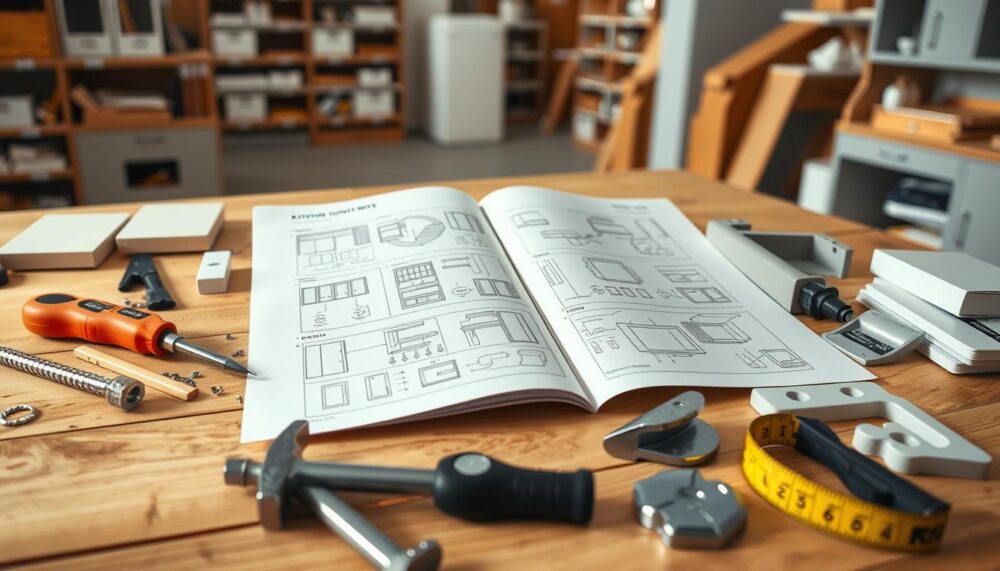
Welcome to your comprehensive, beginner-friendly guide for putting together your new kitchen furniture. This resource is designed to make the entire process feel straightforward and accessible for everyone.
B&Q offers reliable solutions for UK homeowners, backed by a solid 25-year guarantee on materials like wood and laminate. Proper installation is key. It enhances both the functionality and the style of the busiest room in your home.
Our guide covers everything from initial planning to those final adjustments. This ensures you achieve a professional-looking finish that you can be proud of.
We encourage you to take your time and follow each step carefully for the best results. Always prioritise safety and double-check your measurements to avoid common mistakes.
With a variety of styles and finishes available, from shaker to slab doors, there’s something to suit every taste. Even with no prior experience, this guide makes your DIY project completely achievable.
Remember to gather all your tools and materials before you begin for a much smoother process. Get ready for a stress-free and genuinely rewarding project.
You Might Also Like:





Key Takeaways
- This is a complete, beginner-friendly guide for installing your new furniture.
- B&Q products come with a strong 25-year guarantee for peace of mind.
- Correct fitting improves both the look and use of your room.
- The instructions cover all stages, from start to finish.
- Taking your time and checking measurements leads to the best outcome.
- A wide range of styles is available to match your preferences.
- Gathering everything you need beforehand makes the job easier.
Introduction: Your Stress-Free Path to a New B&Q Kitchen
Starting your renovation journey brings exciting possibilities for your home. A well-organised approach transforms what could be a stressful project into an enjoyable experience.
Careful planning saves both time and money compared to hiring professionals. You gain complete control over the process while creating significant savings.
Begin with detailed graph paper sketches of your room layout. Double-check every measurement before making any cuts or installations.
Most base and wall units follow standard sizing conventions. Always consult your specific manufacturer’s instructions as specifications can vary between product lines.
B&Q’s offering includes a remarkable 25-year guarantee on materials. Their collections span from classic traditional designs to sleek contemporary styles.
Correct fitting ensures lasting structural integrity throughout your cabinetry. This prevents common issues like sagging shelves or misaligned door fronts.
Attention to small details makes a substantial difference to the final look. Coordinated handles and complementary finishes create a cohesive appearance.
Our guidance helps you avoid typical DIY errors during installation. You’ll achieve even spacing and secure bracket placement with confidence.
With proper tools and patience, a professional-quality finish is absolutely attainable. The process becomes straightforward when approached methodically.
Completing this project yourself brings immense personal satisfaction. You create a functional space that reflects your unique personality and needs.
| Planning Aspect | Professional Installation | DIY Approach |
|---|---|---|
| Total Cost | £3,000-£8,000+ | Materials only |
| Time Commitment | 1-2 weeks | Flexible schedule |
| Customisation Level | Limited options | Complete creative control |
| Skill Requirement | None needed | Beginner-friendly guidance |
| Final Satisfaction | Professional result | Personal achievement |
View this project as an opportunity to craft your ideal cooking environment. You’ll create a beautiful space tailored precisely to your lifestyle requirements.
Gathering Your Toolkit: Essential Equipment for the Job
Having the correct equipment ready transforms your installation experience from frustrating to fantastic. Proper preparation prevents those annoying mid-project trips to the shops.
Investing in quality tools pays dividends through precise results and time savings. Everything listed here is readily available at your local B&Q store or through their online service.
Essential Measuring and Levelling Tools
Accuracy begins with reliable measurement instruments. A quality tape measure forms the foundation of your entire project.
Mark guidelines clearly using a sharp pencil. For perfect alignment, nothing beats a trusty spirit level.
Always use spirit level checking during cabinet positioning. This ensures your units sit perfectly horizontal and vertical.
Drilling, Fixing, and Assembly Tools
Your power drill serves as the workhorse for this job. Equip it with various screwdriver bits for different tasks.
For challenging walls, a hammer drill makes creating holes significantly easier. Clamps provide invaluable extra hands during assembly.
Select appropriate wall fixings based on your wall type. Brackets and 15 mm screws create secure connections between units.
Safety Equipment and Useful Extras
Safety should never become an afterthought. A cable and pipe detector prevents disastrous drilling accidents.
Protective goggles shield your eyes from debris. Masking tape helps mark drill bit depth guides perfectly.
Organise your tools in a dedicated area for efficiency. A 90° try square ensures perfect door hinge alignment later.
“The right tool for the right job makes all the difference between struggle and success.”
Check your equipment condition before beginning. Ensure spirit levels show true readings and drill bits remain sharp.
Having everything prepared upfront creates a smooth, uninterrupted workflow. You’ll appreciate this organisation when the real work starts.
First Steps: Planning Your Kitchen Layout and Measurements
Creating a thoughtful floor plan transforms your renovation from guesswork to precision engineering. Begin with detailed graph paper sketches showing your room’s exact dimensions.
Consider door swing arcs and appliance placements during this initial phase. These elements significantly impact your final kitchen layout functionality.
Accurate measurement forms the foundation of your entire project. Note dimensions for all base units, wall cabinets, and any corner solutions.
Measure twice and cut once remains the golden rule here. Even minor errors can create alignment issues during installation.
Mark horizontal guidelines on your walls using a reliable spirit level. This ensures units align perfectly with existing appliances and features.
Plan for worktop thickness by measuring upward from your base units. This determines the ideal position for your wall cabinets.
Older properties often feature uneven surfaces or odd angles. Adjustable corner posts and filler panels solve these common challenges beautifully.
You’ll ‘ll need to make sure all measurements receive double verification. This prevents frustrating adjustments during the physical installation phase.
For complex configurations, consider consulting B&Q’s planning services. Their in-store designers offer valuable insights for challenging spaces.
Proper planning ensures maximum storage capacity without overwhelming the room. It creates balanced proportions throughout your cooking area.
Label each cabinet on your plan to streamline the installation process. This simple step saves considerable time during the physical work.
Thorough preparation sets the foundation for a genuinely stress-free experience. Your future self will thank you for this meticulous approach.
“Measure with precision, install with confidence – the blueprint for renovation success.”
Remember that perfect planning leads to professional results. You’re building the framework for your dream cooking space.
How to Assemble B&Q Kitchen Base Units
Building your base units correctly creates a solid foundation for your entire kitchen. This stage requires careful attention to detail and precision levelling.
Following these steps ensures your cabinets align perfectly and function flawlessly. You’ll achieve professional results with patience and the right technique.
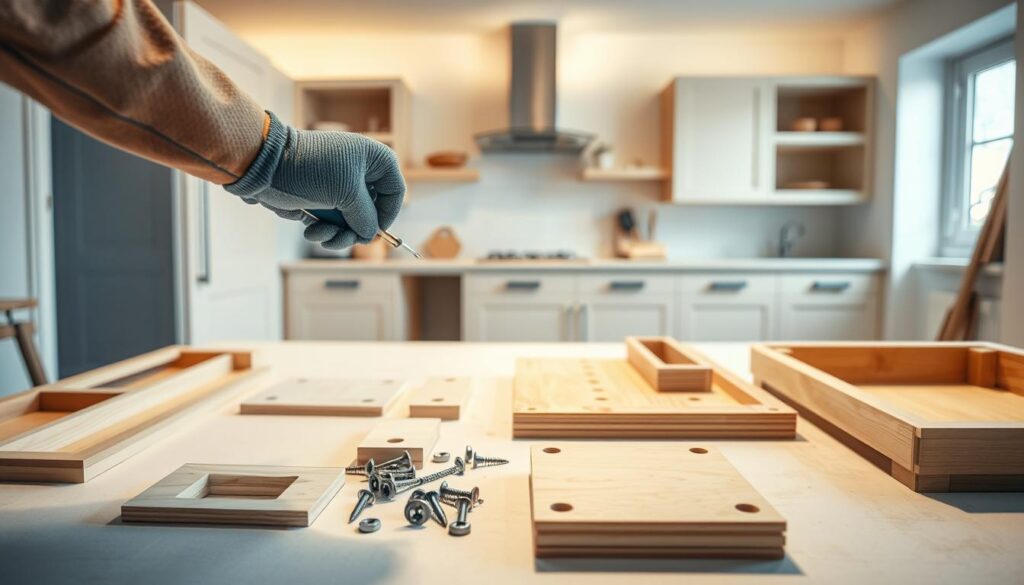
Step 1: Marking Your Guideline and Positioning Units
Begin by establishing a perfect horizontal reference line on your walls. Use your spirit level to mark where the top of your units will sit.
Account for adjustable legs when setting this important guideline. Position corner units first for optimal layout flow.
Rotate the legs until the cabinet aligns precisely with your marked line. Check alignment with neighbouring appliances during this positioning phase.
Step 2: Levelling the Cabinets and Connecting Them
Ensure each cabinet sits perfectly level before making permanent connections. Use clamps to hold adjoining units firmly together during this process.
Drill pilot holes using masking tape as a depth guide for consistency. Secure cabinets together with appropriate screws for lasting stability.
Consider adding cabinet connector bolts in high-traffic areas. These provide extra reinforcement where needed most.
Step 3: Fitting Corner Posts and Final Wall Fixing
Install corner posts where cabinets meet at right angles. These clever components hide gaps and enhance structural integrity.
Follow manufacturer instructions for perfect post installation. They create seamless transitions between your base units.
Finally, secure everything to the wall using appropriate brackets. Always check for hidden pipes and cables before drilling any holes.
Angle screws downward slightly for easier access and superior holding power. Test each unit’s stability before progressing further.
“Precision in levelling creates perfection in appearance – the mark of quality craftsmanship.”
Well-constructed base units form the backbone of your dream kitchen. They provide reliable support for worktops and years of faithful service.
Securing Your Wall Units Safely and Accurately
Mounting your overhead storage requires careful attention to detail and precision. Proper installation ensures both safety and visual harmony in your finished space.
Following these steps guarantees your wall cabinets remain securely fixed for years of reliable service. You’ll create a professional finish that enhances your room’s functionality.
Step 1: Marking Out the Position for Wall Cabinets
Begin by measuring upward from your base units’ tops. Account for worktop thickness when determining the bottom position of your overhead storage.
Use your spirit level to draw extensive horizontal guidelines. Mark vertical lines where cabinets will meet for perfect alignment.
Consider the relationship with tall units and appliances during this planning phase. Consistent spacing creates a balanced appearance throughout your room.
Step 2: Fixing the Wall Brackets Correctly
Follow manufacturer instructions for bracket placement—typically two per unit in top corners. Mark drilling positions carefully before proceeding.
Select appropriate wall fixings based on your wall type. Plasterboard, brick, and timber studs all require different fixing solutions.
Safety first: Always check for hidden pipes and cables using a detector. Incorrect bracket fitting can cause cabinets to fall—consult an expert if unsure.
Step 3: Hanging and Levelling the Units
Hook cabinets onto brackets with a helper supporting the weight during adjustment. Use internal screws in top corners to fine-tune position.
Place your spirit level across front and top edges repeatedly during hanging. Make small adjustments until everything sits perfectly level.
Ensure cabinets align with each other and sit flush against the wall. Test doors for smooth operation after installation confirms proper alignment.
“Precision in overhead installation brings peace of mind and visual perfection.”
Working with a partner makes adjusting heavy units much simpler. They can hold items steady while you focus on levelling tasks.
Accurate bracket fitting and careful levelling are crucial for safety and aesthetics. These steps ensure long-term stability for your overhead storage solutions.
For additional guidance on wall types and fixing selection, consult our comprehensive installation resource.
Installing Drawers for Smooth and Flexible Storage
Well-fitted drawers transform your storage experience with effortless access and organisation. They provide flexible solutions for cutlery, utensils, and cooking essentials.
This installation requires basic tools like a screwdriver and careful attention. Following manufacturer guidelines ensures perfect alignment and smooth operation.
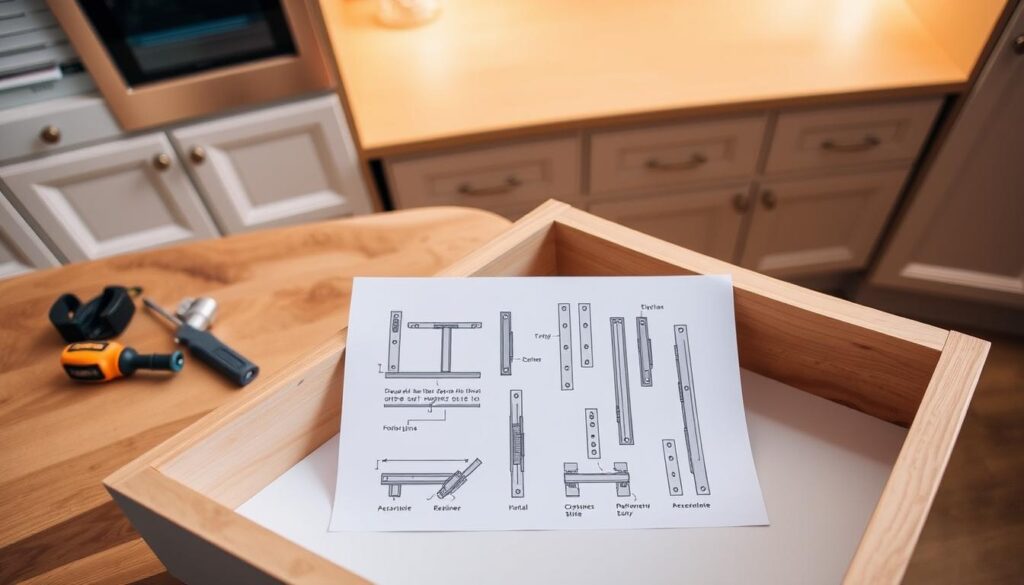
Begin by fixing drawer runners to the interior of your cabinet. Ensure they sit parallel and at equal heights for consistent performance.
Use a spirit level during this crucial positioning stage. Mark drilling points carefully before creating pilot holes.
Assemble drawer boxes according to the provided instructions. Attach fronts securely using the recommended fixings.
Slide completed drawers onto their runners until they click into place. Test the movement several times to confirm smooth gliding action.
Fine-tune gaps between drawer fronts using adjustment screws. This creates a seamless appearance across your storage units.
Check that drawers close softly if equipped with dampening mechanisms. Proper installation prevents sticking or misalignment issues.
Organise contents using dividers or inserts to maximise available space. This keeps everything tidy and easily accessible.
Test each drawer multiple times to ensure reliable long-term performance. Well-installed drawers significantly enhance functionality.
“Smooth-running drawers represent the hallmark of quality kitchen design – where practicality meets perfection.”
Proper drawer installation completes your storage system beautifully. It brings professional-standard organisation to your cooking space.
| Drawer Component | Installation Tip | Functionality Benefit |
|---|---|---|
| Runners | Ensure perfect parallelism | Smooth gliding action |
| Drawer Box | Follow assembly sequence | Structural integrity |
| Front Panel | Align with adjacent units | Visual consistency |
| Adjustment Screws | Fine-tune gaps gradually | Seamless appearance |
| Soft-close Mechanism | Test multiple times | Quiet operation |
Complete this job methodically for outstanding results. Your efforts will be rewarded with beautifully organised storage that functions flawlessly.
Fitting and Adjusting Cabinet Doors for a Perfect Finish
Attaching your cabinet doors represents the final transformative stage of your project. This process brings visual harmony and completes the overall aesthetic of your space.
Most hinges slot easily into pre-cut holes on your doors. This thoughtful design simplifies what could otherwise be a complex job.
Use a 90° try square to confirm perfect hinge alignment before tightening screws. This ensures your doors hang straight and function correctly from the start.
Fix hinge plates to the cabinet side panels using the pre-drilled holes. Check their orientation carefully to avoid installation issues later.
Work with a helper when lifting heavier doors into position. They can support the weight while you focus on accurate attachment.
Clip or screw the hinge arms securely onto the mounted plates. Test the movement gently to confirm everything connects properly.
Fine-tuning creates that professional finish you’re aiming for. Use a Pozidriv screwdriver to make precise adjustments in three directions.
Side-to-side adjustments correct alignment with neighbouring units. Up-and-down changes level the doors perfectly.
In-and-out screws bring doors flush with the cabinet frame. These small tweaks eliminate gaps and ensure smooth closing.
Well-adjusted doors prevent common issues like sagging or improper sealing. They create a cohesive look throughout your storage solutions.
Support doors during adjustment to prevent sudden drops. This protects both your fingers and the door finish.
Spend time achieving perfect alignment, especially with replacement doors. Your patience will be rewarded with a flawless appearance.
For damaged mounting points, consider using hinge repair plates. These clever solutions save you from more extensive repairs.
“Perfectly hung doors are the jewellery of kitchen design – they complete the outfit with elegance and precision.”
Well-fitted doors enhance both visual appeal and practical functionality. They provide smooth operation and lasting satisfaction.
| Adjustment Type | Screw Function | Visual Outcome |
|---|---|---|
| Side-to-Side | Aligns with adjacent units | Even spacing |
| Up/Down | Levels the door | Horizontal consistency |
| In/Out | Sets depth position | Flush appearance |
Complete this final stage with care and attention to detail. Your efforts will create a beautifully finished space that functions perfectly.
Solving Common Installation Issues
Even with careful preparation, you might encounter some challenges during your project. Most issues have straightforward solutions that don’t require starting over.
Uneven gaps between cabinets or doors often stem from measurement inaccuracies. Minor adjustments usually resolve these visual inconsistencies perfectly.
If a door doesn’t close properly, revisit the hinge adjustment process. The three-way screws allow precise alignment corrections without much effort.
Older properties frequently have uneven walls that create fitting challenges. Adjustable corner posts and filler panels bridge these gaps effectively.
Always test the structural stability of each cabinet connection. Gently rock units to check bracket security and screw tightness.
Drawers that stick or jam typically have misaligned runners. Realign them carefully following the manufacturer’s guidelines for smooth operation.
You’ll need to remain vigilant about hidden pipes and cables. Always use a detector before drilling into any wall space.
If corner posts were fitted incorrectly, realignment might be necessary. Loosen connecting screws slightly before making positional adjustments.
Most problems are fixable with patience and minor tweaks. Don’t hesitate to consult B&Q’s technical support for persistent difficulties.
“Every challenge overcome builds confidence and creates a more durable, beautiful finish for your cooking space.”
Remember that solving these issues leads to a professionally finished kitchen. Your perseverance will be rewarded with a space that functions flawlessly for years.
Conclusion: Enjoy Your Professionally Installed Kitchen
Your journey from planning to completion has transformed your space. Following each step carefully ensures a stunning result.
This DIY achievement brings immense satisfaction and adds real value to your home. The 25-year guarantee offers peace of mind for years ahead.
Your new kitchen provides organised storage and enhances daily living. Small details like coordinated handles create that professional finish.
Remember to periodically check fittings and clean surfaces. This maintains your beautiful investment perfectly.
We hope this guide made your project stress-free and achievable. Share your success stories with B&Q’s in-store designers.
Congratulations on creating the heart of your home! Enjoy every moment in your beautifully functional space.
FAQ
What are the most essential tools I’ll need for the installation?
You’ll need a spirit level, tape measure, power drill, screwdriver bits, and wall plugs. A good spirit level is crucial for ensuring your cabinets are perfectly aligned.
How do I ensure my base units are level on an uneven floor?
Use your spirit level across the top of the units and adjust the feet at the base. Shims can be used for minor adjustments to achieve a perfectly level finish.
What’s the best way to mark out the position for wall cabinets?
First, use a tape measure to find and mark your desired height from the floor. Then, use a spirit level to draw a long, straight guideline along the wall to ensure everything is fixed evenly.
How do I fit the corner posts for a kitchen corner unit?
The posts are usually supplied with the unit. They screw into pre-drilled holes on the cabinet’s side, creating a strong frame for attaching the adjacent unit and ensuring structural integrity.
My cabinet doors aren’t aligning properly. How can I fix this?
Most hinges on cabinet doors are adjustable. You can usually tweak them with a screwdriver to move the door up, down, in, or out until you achieve a uniform look.
What should I do if I hit an obstacle, like a pipe, when drilling into the wall?
Stop drilling immediately. Use a stud and pipe detector before you start to identify hazards. If you do encounter an issue, you may need to adjust the unit’s position slightly.
How do I attach the drawers to the cabinet?
The drawer runners typically clip or screw into pre-drilled holes inside the cabinet. Then, you simply push the drawer box onto the runners until it clicks securely into place.