
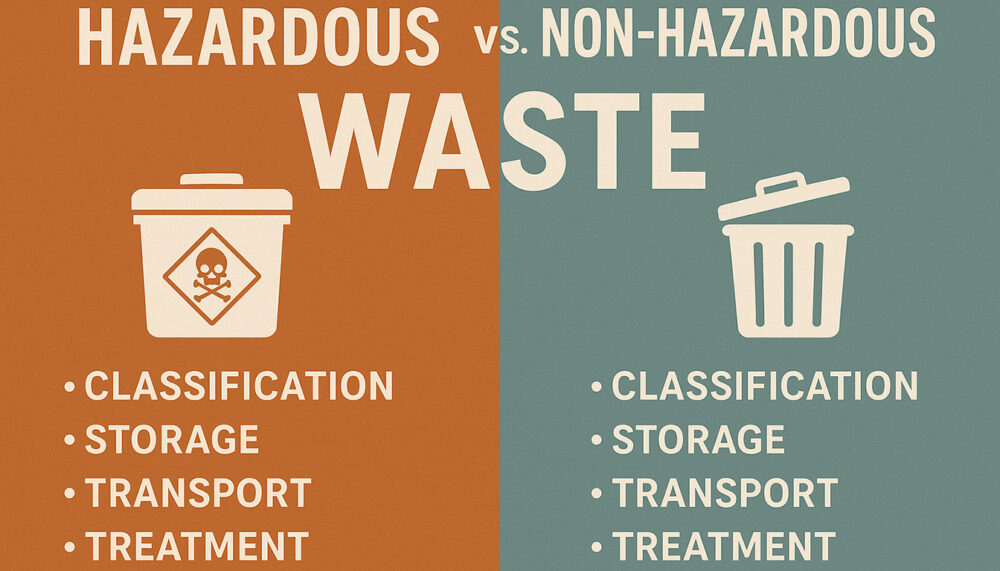
Waste needs to be separated when discarded. In most facilities, it falls into two broad categories: hazardous and non-hazardous waste. Hazardous waste includes materials that can harm people or the environment, such as chemicals, sharps, contaminated packaging, or certain electronics. Non-hazardous waste includes regular waste that does not need special handling.
Many organisations work with medical waste disposal services when they handle items that contain blood, infectious materials, and strong chemicals. Many facilities use a dumpster rental service for non-hazardous waste from offices, shops, or construction work. Keeping these two waste streams apart from the start makes disposal safer, cleaner, and compliant with industry rules.
What Makes Waste Hazardous or Non-Hazardous
Waste is categorised based on the risk it carries. Hazardous waste includes materials that can cause harm through physical contact, inhalation, or improper disposal. For example: chemical cleaners, solvents, contaminated gloves, sharps, batteries, fluorescent lamps, and any item containing toxic or infectious materials. These materials need controlled handling, labelled storage, and disposal through licensed facilities.
Non-hazardous waste covers materials that do not carry chemical, infectious, or reactive risks. Common examples include cardboard, clean plastics, food scraps, paper, and general office waste in household rubbish.
When these wastes are classified clearly, you can prevent mixing them and keep the waste management process organised from the start. The distinction among these categories is necessary as each has separate handling rules, storage requirements, and disposal methods.
Why Proper Classification Matters
When waste materials are classified correctly, it keeps people safe and disposal compliant for facilities. Each waste stream has a specific method for handling, storing, and transporting waste to minimise risks. Misclassified hazardous waste can expose workers to chemical, infectious materials, or sharp objects. It can also damage equipment or contaminate areas that were not design for high-risk waste. Waste handlers expect clear labels, sealed containers, and accurate information when they move or process a load.
You Might Also Like:





Regulators also require proper classification. Facilities record the type of waste they produce, how it is stored, and where it is sent. Incorrect records can lead to penalties, delays, or rejected loads at disposal sites. A clear label at the start prevents most of these issues.
Classification also affects disposal routes. Hazardous waste must go to licensed treatment sites that can neutralize or destroy harmful material. Non-hazardous waste goes to standard recycling, composting, or land field facilities. When these two groups are separated, it prevents any cross-contamination and keeps the disposal chain manageable.
How Hazardous Waste Is Collected and Handled
Hazardous waste needs controlled handling from the moment it leaves the site. Each step focuses on keeping workers safe and preventing leaks, spills, or exposure.
Segregation at Source
Hazardous waste is separated before it goes into storage. Workers place chemicals, sharps, contaminated wipes, and similar items in labelled containers that match their risk level. Containers stay sealed to prevent spills or contact.
Safe Storage and Transport
Storage areas keep hazardous waste away from busy sections of the facility. Containers are kept on stable surfaces and are closed until pick up. Licensed transporters collect these loads, record the contents, and move them to an approved treatment site.
Common Disposal Methods
Hazardous waste goes through methods that neutralize or destroy harmful materials. Chemical waste may be treated through controlled processes that reduce its reactivity. Sharps and contaminated items go to high-temperature facilities that break them down safely. Some materials that remain stable after treatment can be placed in secure landfills built for this purpose.
How Non-Hazardous Waste Is Collected and Handled
Non-hazardous waste moves through a simpler routine as it does not carry chemical or infectious risks. The focus stays on sorting, recycling, and removal to keep the area clear.
Segregation and Recycling
Recyclable items are separated into groups such as cardboard, paper, metals, and clean plastics. This step keeps usable materials out of the landfill and makes processing effective for collection services.
General Waste Streams
Rubbish that cannot be recycled goes to standard waste bins for collection. These loads move to regular disposal sites, composting facilities, or local recycling centers based on the type of material.
Role of Dumpster Rental Services
Many organisations use dumpster rental services for non-hazardous waste produced during renovations, cleanouts, or daily operations. The service provides a container, collects the load when it is full, and sends it to the correct disposal facility. This keeps larger volumes of general waste organised and out of the work area.
Key Differences
The key differences between hazardous and non-hazardous waste become clear once you look at how each type moves through the disposal process.
Classification
- Hazardous waste carries chemicals, infectious, or reactive risks.
- Non-hazardous waste does not contain harmful substances.
Storage
- Hazardous waste is kept in sealed, labelled containers placed in restricted areas.
- Non-hazardous waste can stay in regular bins or open storage without special controls.
Transport
- Hazardous waste needs licensed transporters who follow strict routes and record each load to stay compliant.
- Non-hazardous waste is disposed of through standard collection services.
Treatment
- Hazardous waste goes to treatment sites built for chemicals or infectious materials.
- Non-hazardous waste moves to recycling, composting, or landfill.
Documentation
- Hazardous waste requires tracking forms and accurate records.
- Non-hazardous waste needs minimal documentation.
Industry Examples That Show the Difference
Examples from common workplaces make the split between hazardous and non-hazardous waste easier to see.
Healthcare Facilities
Clinics and health care settings send items that contain blood or sharp edges to licensed hazardous waste services. Routine waste from staff areas and waiting rooms goes into regular collection.
Construction Sites
Materials that carry chemical residue or strong adhesives are handled as hazardous waste. Clean debris and packaging from the site are sent to the non-hazardous waste stream.
Offices and Commercial Buildings
Maintenance teams send items like fluorescent lamps or used batteries to hazardous waste handlers. Paper, cardboard, or food waste from daily operations stay in non-hazardous bins.
Why Business Should Work With the Right Waste Partner
Different waste streams need different handling methods, so most organisations rely on specialist services instead of managing everything on their own. The points below show how each partner fits into the system.
Hazardous Waste Services
Licensed hazardous waste handlers manage chemicals, sharps, and contaminated materials. They supply the correct containers and follow controlled pick-up routines that match regulatory standards. Their routes lead to treatment sites equipped to neutralize or destroy the waste.
Non-Hazardous Waste Services
General waste collection goes through simpler systems. Dumpster rental works for packaging, food waste, clean debris, and other everyday rubbish. These services keep loading areas clean and prevent storage rooms from filling up during busy operations.
Keeping Waste Streams Separate
Working with the right partner prevents cross-contamination. Hazardous waste is handled in a controlled way. Non-hazardous waste stays in routine disposal channels.
Final Thoughts
Hazardous and non-hazardous waste need different handling methods for safe disposal. A clear classification from the beginning leads to reliable storage, transport, and treatment for every type of waste. It protects workers, keeps the facility compliant, and prevents delays during pickup or treatment. Sorting waste into the right category is not a complex task. It is a simple step that impacts the health and safety of the environment. When each waste stream is disposed of correctly, the entire process operates without any risk of exposure.