
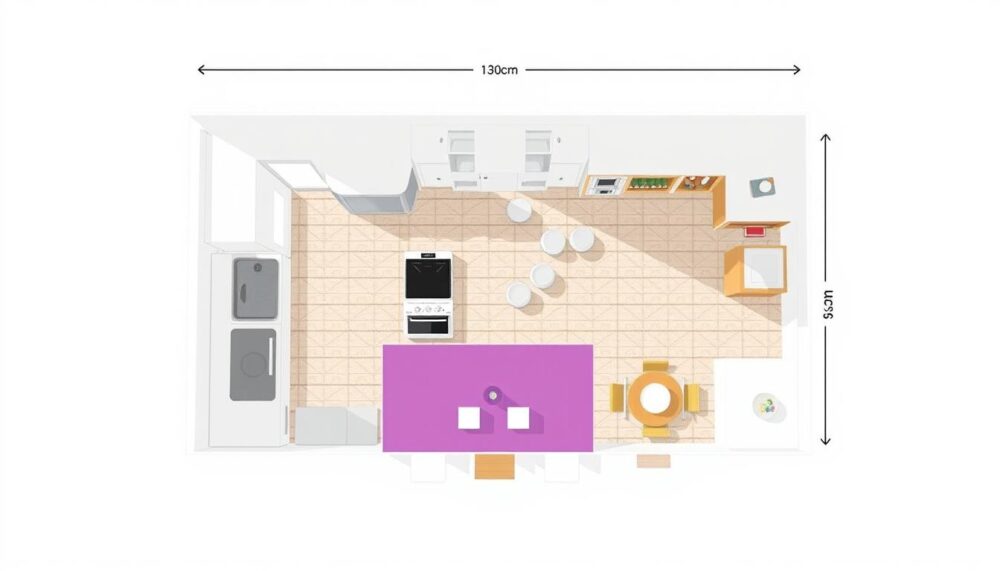
Welcome to your comprehensive guide for crafting a beautiful and functional kitchen space. We’ll help you transform your room into an area that perfectly suits your lifestyle and needs.
Discover the essential measurements, clever zoning principles, and layout rules that professional designers use. Whether you’re updating an existing space or starting fresh, this friendly guide makes the process enjoyable and accessible.
We cover everything from initial planning and budgeting to final decisions about appliance placement. You’ll learn about creating efficient work zones around key areas like the sink and cooking surfaces.
By following professional guidance on kitchen layout efficiency, you can create a space that functions brilliantly for cooking, socialising, and daily life. Proper planning ensures everything has its place and works harmoniously together.
Key Takeaways
- Understanding kitchen measurements is crucial for optimal space utilisation
- Creating distinct functional zones improves workflow and efficiency
- Professional layout rules help maximise both aesthetics and practicality
- Considering appliance placement early prevents costly changes later
- Proper planning incorporates both storage needs and traffic flow patterns
- Following cabinet installation guidelines ensures proper spacing and functionality
- Balancing beauty with functionality creates your dream cooking environment
Introduction: Designing a Kitchen That Works for You
Your kitchen serves as the bustling centre of your home, where meals are prepared and memories are made. This hard-working room demands careful consideration to balance style with practical functionality.
A successful kitchen design transforms cooking from a chore into a pleasure. It creates spaces where cleaning and organisation happen effortlessly. Your layout should reflect your unique lifestyle rather than following trends.
You Might Also Like:
Consider how you actually use your cooking area daily. Do you entertain frequently? Need space for family gatherings? Prefer quick meals or elaborate cooking? These questions shape your perfect kitchen plan.
Thoughtful design brings numerous benefits:
- Improved workflow reduces cooking time and effort
- Entertaining guests becomes more enjoyable and stress-free
- Everything finds its place with clever storage solutions
- Daily tasks feel smoother with logical appliance placement
Investing time in proper planning prevents costly mistakes later. It ensures your dream kitchen meets all requirements for years. Remember that aesthetics and practicality must work together harmoniously.
Approach your project with confidence. With the right guidance, you can create a space that perfectly suits your needs. Your kitchen should feel like it was made just for you.
Whether you’re an avid cook or prefer quick meals, your layout matters. The right design makes all activities more enjoyable. It turns your kitchen into the heart of your home it deserves to be.
How to Design My Kitchen Floor Plan: Your Initial Checklist
Every successful renovation begins with thorough preparation. This initial stage sets the foundation for your entire project, ensuring your vision becomes reality without unexpected surprises.
Taking time to plan properly saves both money and stress later. It helps you make informed decisions that align with your lifestyle and requirements. Let’s explore the crucial first steps in your journey.
Establishing a Realistic Budget for Your Project
Financial planning forms the backbone of any successful renovation. According to industry experts, a kitchen overhaul typically costs 5-10% of your property’s value. This guideline helps set realistic expectations from the outset.
Always include a contingency fund of 10-15% for unexpected expenses. Older properties often reveal hidden issues once work begins. This buffer prevents stressful financial surprises during your project.
Remember that quality craftsmanship and materials represent investments in your home’s value. Prioritise spending on elements you use daily, like work surfaces and essential appliances.
Assessing Your Current Space and Needs
Look critically at your existing room before making changes. Identify what functions well and what causes frustration in your daily routine. Consider workflow patterns around key areas like preparation zones and cleaning stations.
Ask yourself important questions about your lifestyle. Do you need more work surface for elaborate cooking? Would additional storage solve organisation issues? Is the current layout efficient for your family’s needs?
Think about traffic flow and how people move through the area. Note any awkward corners or underutilised spaces that could be better employed. This honest assessment informs smarter design choices.
Gathering Inspiration and Creating a Wishlist
Collect ideas from various sources to shape your vision. Kitchen showrooms offer hands-on experience with different layouts and finishes. Magazines and social media provide endless aesthetic inspiration.
Create a mood board with colours, materials, and styles that appeal to you. Notice patterns in what you’re drawn to repeatedly. This helps develop a coherent look for your new space.
Separate your wishes into essential requirements and desirable extras. This prioritisation ensures your budget covers must-have elements first. It also helps when making difficult choices later in the process.
Consider how each inspiration element would function in your specific room. Beautiful ideas must also work practically within your available area and lifestyle needs.
The First Step: Measuring Your Kitchen Accurately
Precision measurement forms the foundation of any successful kitchen transformation. Getting your dimensions right from the start prevents costly errors and ensures everything fits perfectly.
Professional designers always begin with meticulous measuring. This approach saves both time and money during installation. Your dream cooking space deserves this careful attention to detail.
Accurate measurements help visualise your new layout possibilities. They ensure appliances and units position correctly within your available area. Nothing beats that satisfaction of perfect first-time fitting.
Essential Measurements: Walls, Ceilings, and Openings
Start by measuring wall lengths in millimetres for precision. Note any alcoves, projections, or irregular features that might affect your layout. Measure ceiling height at multiple points around the room.
Document all openings including doors and windows. Measure to the outside of architraves for accurate unit placement. Note which way doors open and window sill heights.
Essential measurements to record:
- Wall lengths between corners and openings
- Ceiling height at various locations
- Door and window positions from adjacent walls
- Architrave widths and reveal depths
- Any permanent fixtures or structural elements
Locating Services: Plumbing, Electrics, and Gas Points
Service locations significantly impact your kitchen layout options. Moving plumbing or electrical points proves expensive and disruptive. Working with existing positions often saves substantial costs.
Document all socket outlets, light switches, and consumer unit positions. Note water inlet and waste pipe locations precisely. Record gas meter position and boiler specifications if present.
“Service locations dictate practical layout possibilities more than any other factor. Understanding these constraints early prevents disappointment later.”
Create a comprehensive services map showing exact measurements from walls and floors. Include ventilation requirements and any external flue positions. This information proves invaluable during planning stages.
Tips for Dealing with Non-Standard or Period Properties
Older properties often feature charming irregularities that require special consideration. Walls may not be perfectly straight or corners exactly square. Ceilings might slope or feature unusual heights.
Measure across both front and back of the room to check for variations. Note any sloping floors or uneven surfaces. These characteristics add charm but demand careful planning.
For period homes, consider these additional measurements:
| Feature | Measurement Approach | Considerations |
|---|---|---|
| Uneven walls | Measure at multiple heights | Allow for deepest projection |
| Sloping ceilings | Record lowest and highest points | Affects tall unit placement |
| Original features | Document precise positions | May require design adaptation |
| Hidden elements | Measure inside existing cabinets | Reveals pipes or boxing |
Embrace these unique features rather than fighting against them. They contribute character that modern properties often lack. Your design should celebrate these historical details.
Thorough measurement taking might feel tedious initially. However, this investment pays dividends throughout your project. It ensures your new kitchen fits perfectly and functions beautifully.
Drawing Your Kitchen Floor Plan: From Sketch to Layout
Translating your vision into a clear visual representation marks an exciting stage in your project. Creating a detailed floor plan helps communicate your ideas effectively with professionals and ensures your dream space becomes reality.
This process bridges the gap between imagination and practical execution. A well-drawn plan serves as your roadmap throughout the renovation journey. It helps visualise how everything will fit together harmoniously.
Whether you prefer traditional sketching or digital solutions, numerous accessible options exist. The key lies in creating accurate, clear drawings that capture all essential details. Your efforts here prevent misunderstandings later.
Simple Tools for Drawing Your Plan
You needn’t invest in expensive software to create professional-standard drawings. Basic stationery supplies work perfectly for this task. A pencil, ruler, eraser and graph paper form your essential toolkit.
Graph paper’s grid lines help maintain scale and proportion effortlessly. Choose a scale that makes your drawing clear yet manageable. Many find 1:20 or 1:25 scales work well for domestic projects.
Digital alternatives offer convenience for tech-savvy homeowners:
- Magicplan creates floor plans using your smartphone’s camera
- RoomScan Pro generates accurate layouts by scanning walls
- Both apps export professional PDFs for sharing with designers
These user-friendly applications simplify the process significantly. They automatically calculate measurements and create neat, scalable drawings. Many offer free versions with sufficient functionality for basic needs.
What to Include on Your Floor Plan Drawing
Your drawing should present a bird’s-eye view of the entire area. Start by outlining the room’s shape, including all walls and permanent features. Mark windows, doors and any structural elements clearly.
Include all your precise measurements from earlier documentation. Avoid overlapping dimensions that might cause confusion. Use a numbered key system for referencing additional details.
Essential elements to incorporate:
- Wall lengths and room dimensions
- Door and window positions with opening directions
- Existing service points and electrical outlets
- Permanent fixtures like radiators or chimney breasts
- Ceiling height variations or structural beams
Photographs provide invaluable context for your drawn plans. Capture each wall comprehensively, including tricky corners and awkward spaces. Don’t forget areas under sinks or around boilers.
Consider creating both “as existing” and “proposed” layout versions. This comparison helps visualise changes more effectively. It also demonstrates your thinking process to professionals.
Clarity remains paramount throughout your drawing. Neat, well-organised plans prevent misinterpretation and ensure your vision translates accurately. They streamline discussions with kitchen specialists and installers.
Remember that your floor plan serves as a communication tool. Its quality directly impacts how well others understand your requirements. Investing time here pays dividends throughout your project.
Understanding the Principles of Kitchen Design
Mastering fundamental design principles transforms your cooking area into an efficient, enjoyable space. These time-tested concepts ensure everything works harmoniously together.
The classic work triangle connects your fridge, hob, and sink. Each side should measure no more than 1.2 metres for optimal workflow. This arrangement minimises unnecessary steps during meal preparation.
A secondary cleaning triangle links your sink, bin, and dishwasher. Keeping these elements close together streamlines clearing up after meals. This clever arrangement makes cleaning duties far more manageable.
Proper clearance measurements prevent daily frustrations. Allow 40cm between open doors and opposite units. Maintain at least 120cm between parallel runs for comfortable movement.
Standard worktop height typically measures 90cm. However, your elbow should sit a few centimetres above the surface. This personalised approach ensures comfortable food preparation.
Professional designers balance aesthetics with practical functionality. They adapt these principles to your specific needs and room characteristics. The result is a beautiful, usable space that feels tailor-made.
Consider these essential measurements for your project:
- Work triangle sides under 1.2 metres
- 40cm door clearance
- 120cm walkway space
- Worktop height based on your elbow position
Good design prevents common issues like traffic jams and inefficient workflows. It creates a logical progression between different zones. Your cooking experience becomes smoother and more enjoyable.
Remember that principles should guide rather than restrict your creativity. Adapt them to suit your unique requirements and available area. The goal is creating a space that works perfectly for your lifestyle.
These fundamental concepts form the foundation of successful kitchen planning. They ensure your finished room combines beauty with brilliant functionality. Your dream cooking environment awaits thoughtful application of these principles.
Crafting an Efficient Kitchen Workflow
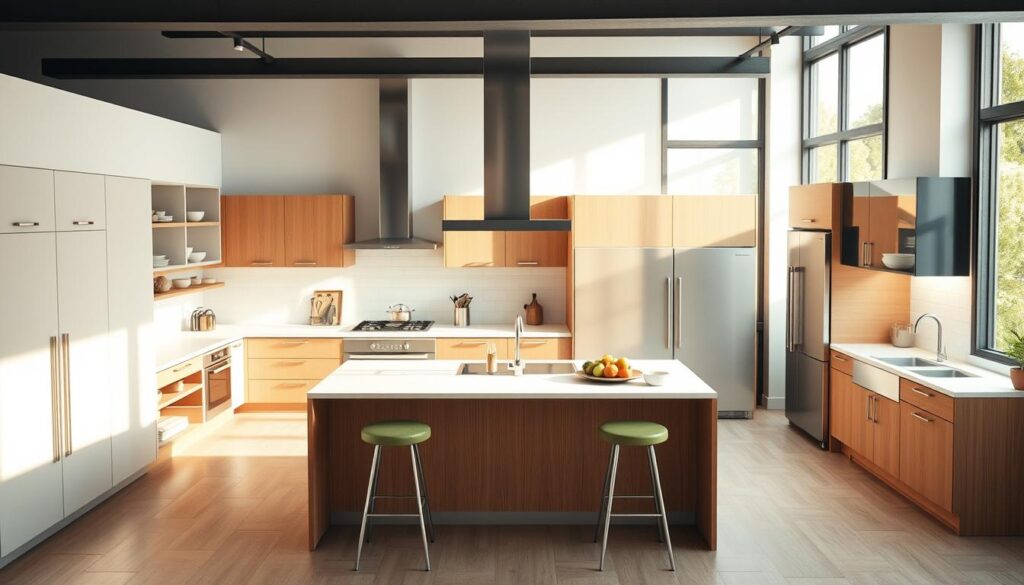
Creating smooth movement patterns transforms your cooking experience from frustrating to fantastic. Thoughtful zone planning ensures everything flows naturally during meal preparation and cleaning.
Professional designers focus on three key areas that work together harmoniously. Each zone serves a specific purpose while connecting seamlessly with others. This approach makes daily tasks feel effortless and enjoyable.
The Preparation Zone: Your Countertop Workspace
Your preparation area forms the heart of meal creation activities. Position this space strategically between storage units and cooking appliances. Ample work surface proves essential for chopping, mixing and organising ingredients.
Keep this zone near the sink for washing vegetables and fruits. Proximity to refrigeration ensures easy access to perishable items. Utensil drawers should sit within comfortable reaching distance.
Essential preparation zone features include:
- Minimum 90cm continuous work surface
- Overhead lighting for clear visibility
- Easy access to mixing bowls and measuring tools
- Position near windows for natural light
The Cooking Zone: Hob, Oven, and Utensil Storage
Your cooking area demands careful consideration for safety and efficiency. Keep frequently used utensils within arm’s reach of the hob. This arrangement saves time and movement during busy meal preparation.
Position oven gloves and baking trays near the oven cavity. Consider pull-out storage solutions for pots and pans. These clever ideas keep everything organised yet accessible.
Ventilation plays a crucial role in maintaining air quality. Ensure your extractor functions effectively for your hob size. Proper ventilation prevents lingering cooking odours throughout your home.
The Cleaning Zone: Sink, Dishwasher, and Waste
An efficient cleaning area makes post-meal tidying much simpler. Position your sink, dishwasher and bin in a logical triangle formation. This arrangement streamlines the clearing and washing process.
Dish storage should sit near the dishwasher for easy unloading. Consider plate racks and cupboard organisers for efficient stacking. These solutions save time when putting away clean items.
Many homeowners enjoy positioning the sink with a pleasant view. Looking into the room or through windows makes washing-up more enjoyable. This small consideration enhances daily experience.
| Zone | Key Components | Optimal Placement | Workflow Benefits |
|---|---|---|---|
| Preparation | Work surface, storage, lighting | Between fridge and cooking zone | Reduces movement during meal prep |
| Cooking | Hob, oven, utensil storage | Away from traffic areas | Ensures safety and efficiency |
| Cleaning | Sink, dishwasher, waste bin | Near dining area | Streamlines post-meal cleanup |
Zone separation helps prevent cross-contamination between activities. Raw food preparation stays away from clean dish storage areas. This thoughtful planning maintains hygiene standards effortlessly.
Consider how an island might function within your workflow. Ensure it doesn’t block appliance access or create bottlenecks. Allow sufficient space for doors to open fully and people to pass comfortably.
Your dream cooking environment emerges through careful zone planning. Each area supports the others while serving its specific purpose. The result is a beautifully functional space that works perfectly for your lifestyle.
Strategic Appliance Placement for Optimal Use
The magic of a well-organised kitchen lies in how appliances work together harmoniously. Thoughtful positioning creates seamless workflows that make cooking and cleaning feel effortless.
Professional designers consider both practical functionality and aesthetic appeal when placing major units. This approach ensures your space works beautifully while looking stunning.
Positioning the Fridge, Sink, and Cooker
Many experienced designers begin with sink placement as their foundation. This strategic approach makes perfect sense when you consider its central role in food preparation and cleaning duties.
Positioning your sink with a pleasant view transforms washing-up from a chore into a more enjoyable experience. Consider sightlines through windows or into the main living area.
Key considerations for major appliance placement:
- Maintain the classic work triangle between fridge, cooker, and sink
- Ensure appliance doors open fully without obstruction
- Allow comfortable passing space around open doors
- Consider traffic flow patterns when positioning units
Modern ventilation solutions offer incredible flexibility for cooker placement. Advanced downdraft systems and powerful range hoods allow hobs on islands or interior walls.
Remember that standard 60cm-deep units require approximately 180cm wall-to-wall space. For narrower rooms, consider 50cm-deep units to maintain comfortable circulation space.
Integrating the Dishwasher and Bin Effectively
Your cleaning zone deserves careful attention to maximise efficiency. The relationship between sink, dishwasher, and bin significantly impacts daily functionality.
Position these elements in a logical triangle formation for optimal workflow. This arrangement streamlines the entire cleaning process from clearing to washing and drying.
Dish storage should sit conveniently near the dishwasher for easy unloading. Consider plate racks and clever organisers that make putting away items quick and simple.
Effective integration strategies include:
- Plating-up areas near serving surfaces
- Waste sorting solutions beside preparation zones
- Cleaning product storage near the sink
- Drying racks positioned for efficient air circulation
Many homeowners appreciate having their bin discreetly tucked into a pull-out cabinet. This approach keeps waste out of sight while maintaining easy access during food preparation.
Your dream cooking environment emerges through careful consideration of every appliance’s role. Each unit should feel perfectly placed for both practical use and visual harmony.
Popular Kitchen Layouts Explained
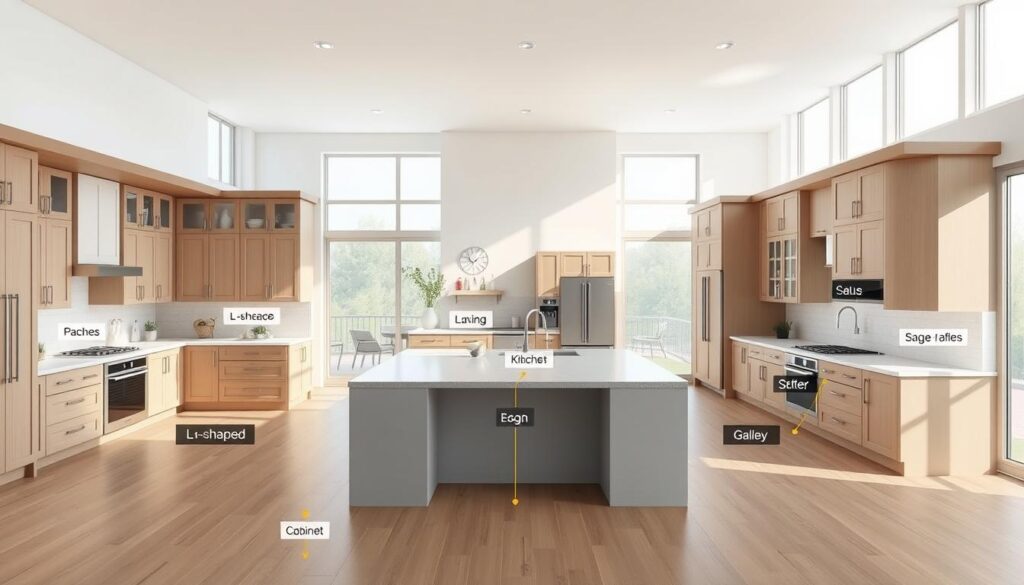
Various kitchen formations offer unique advantages for different room shapes and lifestyles. Understanding these options helps you create a space that truly works for your needs.
Each layout provides distinct benefits for storage, workflow, and social interaction. Your choice depends on available area and how you use the heart of your home.
The Efficient Galley Kitchen
Galley layouts feature two parallel counters with a walkway between them. This clever arrangement maximises work surface and storage in narrow spaces.
These compact designs prove excellent for single cooks who value efficiency. The continuous counter space creates an uninterrupted workflow zone.
Key advantages include:
- Excellent storage solutions along both walls
- Minimal steps between key appliances
- Ideal for smaller homes and apartments
- Cost-effective installation and maintenance
Remember that galley kitchens can feel cramped with multiple people. Ensure adequate passage width between the two counter runs.
The Versatile L-Shaped Kitchen
L-shaped designs utilise two adjacent walls to create a functional cooking area. This flexible arrangement suits both compact and spacious rooms beautifully.
Many homeowners appreciate the open feel this layout provides. It allows for easy traffic flow and social interaction during meal preparation.
Larger spaces can accommodate a central island for additional work surface. This addition creates extra storage and seating opportunities.
The corner space requires thoughtful planning to avoid wasted area. Consider clever solutions like carousel units or pull-out storage.
The Spacious U-Shaped Kitchen
U-shaped layouts surround you with storage and work surfaces on three sides. This formation naturally creates the classic work triangle for efficient cooking.
These designs offer ample cabinet space and generous counter areas. They work wonderfully for serious cooks who need everything within reach.
Larger versions can incorporate a central island for additional functionality. This creates a truly comprehensive cooking environment.
Ensure sufficient floor space remains for comfortable movement. The enclosed feel might not suit homes preferring open-plan living.
The Space-Saving Single-Wall Kitchen
Single-wall arrangements place everything along one continuous surface. This minimalist approach works perfectly in compact apartments and smaller homes.
These layouts maximise limited space while maintaining functionality. They often feature integrated appliances and clever storage solutions.
Strategic planning ensures efficient workflow despite the linear arrangement. Position appliances in logical sequence from preparation to cooking.
Open shelving and light colours help prevent the area feeling cramped. This layout proves that great things come in streamlined packages.
Each layout type presents unique benefits for different requirements. Consider your available space, cooking habits, and storage needs when choosing.
Professional designers often combine elements from multiple layouts. This creates custom solutions that perfectly match your specific situation.
Remember that peninsula and G-shaped variations offer additional flexibility. These hybrid approaches blend the best features of different arrangements.
Incorporating a Kitchen Island or Peninsula
Adding an island transforms your cooking space dramatically. It creates extra work surfaces and clever storage solutions. This feature makes your room more sociable too.
You face guests rather than a blank wall while preparing meals. Islands come in various sizes to suit different spaces. Slimline versions work beautifully in compact areas.
Consider a peninsula if your area feels too tight. These attached islands offer similar benefits without dominating the room. Both options help define zones within open layouts.
Ensure adequate clearance around appliances remains. Doors must open fully without obstruction. Allow comfortable passing space for smooth movement.
Position your island within easy reach of key fixtures. This maintains efficient workflow patterns. Some homeowners include sinks or hobs within their island design.
Mobile islands provide wonderful flexibility for changing needs. Multi-level versions create separate dining or preparation areas. Always consider plumbing and electrical requirements during planning.
Your dream cooking environment deserves thoughtful island placement. It should enhance both functionality and social interaction perfectly.
FAQ
What is the most important first step when planning a new kitchen layout?
The most crucial first step is taking accurate measurements of your room. Knowing the exact dimensions of walls, ceiling height, and the positions of doors and windows ensures your dream kitchen fits perfectly and functions well.
How much space should I leave between my kitchen island and other units?
For comfortable movement and safe use, aim for at least 100cm between your island and surrounding cabinets or appliances. This allows easy access to cupboards and creates a safe, practical cooking environment.
Where is the best place to position my fridge in the kitchen?
Ideally, place your fridge near the entrance to your cooking space. This keeps it accessible for quick snacks and drinks without interrupting the main preparation and cooking zones, making the whole area more efficient.
Can I include an island in a small kitchen?
Absolutely! Consider a slimline or mobile island that can serve as extra workspace or storage. Alternatively, a peninsula attached to a wall can offer similar benefits without taking up as much floor area.
What are the key zones to consider in a kitchen workflow?
Focus on three main zones: the preparation area (with ample worktop space near the fridge), the cooking zone (hob and oven with utensil storage), and the cleaning zone (sink, dishwasher, and bin). A logical flow between these makes cooking a pleasure.
How do I decide on a layout for an awkwardly shaped room?
For non-standard spaces, an L-shaped or galley layout often works brilliantly. These designs maximise corner usage and create an efficient work triangle, making even tricky rooms highly functional and stylish.